
How to Search Richmond County Court Records
The statewide gateway is NYS eCourts, run by the New York State Unified Court System. It links every public case tool: WebCivil Supreme for higher civil and divorce cases, WebCivil Local for Civil Court and small claims, WebCriminal for pending criminal cases, WebFamily for active family matters, and WebSurrogate for estates. For e-filed Supreme Court documents, NYSCEF offers a guest search. Land records use a separate County Clerk portal.
Before you begin, gather a party name, an index or docket number if you have one, and the case type. Names should match court spelling, and a business may be listed under a name that differs from its trade name.
- Open eCourts and choose the tool that matches the case type.
- Search by index number, docket number, or party name.
- Narrow by the Richmond court and by date where the tool allows.
- Open the docket to read filings, appearances, and disposition.
- Request a certified copy from the clerk if you need one for legal use.
If a case does not appear, the cause is often a wrong tool, a spelling difference, a sealed status, or a data delay. Try another tool or contact the clerk before assuming the case does not exist.
Richmond County Court Records Search Fields
WebCivil Supreme is the main tool for Richmond County Supreme Court civil cases, including divorce. It gives several search modes and pulls past, present, and future case information for civil Supreme Court matters only. The table lists each field and what it does.
| Field Label | Type | Required | Notes / Format |
|---|---|---|---|
| Index Search | Index number | One mode required | Finds a case by its Supreme Court index number. |
| Party Search | Name | One mode required | Searches by a party name. |
| Attorney/Firm Search | Name | Optional | Searches by attorney or firm. |
| Justice Search | Name | Optional | Searches matters before a named justice. |
| Court Calendars | Calendar | Optional | Lists calendars by county, justice, and part. |
| eTrack | Service | Optional | Email updates and appearance reminders. |
WebCriminal works differently. Its defendant search needs a first and last name, at least the first two characters of each, or the first five characters of a corporation name, and lets you pick Richmond Criminal Court or Richmond Supreme Criminal Court.
What Richmond County Court Records Show
A public case record shares a common set of fields across courts. A civil Supreme Court file and a Civil Court file both show numbers, parties, dates, and status, though the labels shift by case type. The sample inventory below lists the fields you are most likely to see in a result.
| Field | What It Shows |
|---|---|
| Index / Docket Number | The number that identifies the case in its court. |
| Court and County | Richmond Supreme, Civil, Criminal, Family, or Surrogate. |
| Filing Date | When the action or proceeding began. |
| Parties and Attorneys | Plaintiff, defendant, or petitioner, plus counsel. |
| Event Entries | Motions, appearances, orders, and adjournments. |
| Disposition / Status | Active, disposed, settled, dismissed, or judgment entered. |
Filers must keep confidential personal information out of civil papers under court rule. That covers Social Security numbers, financial account numbers, dates of birth, and minor names except where allowed.
A few terms come up again and again in Richmond County files. Knowing them speeds up any search.
- Index number
- A civil Supreme Court case number bought through the County Clerk.
- RJI
- Request for Judicial Intervention, the filing that asks a judge to act on a civil case.
- Disposition
- The outcome or current status of a case or charge.
- Note of issue
- A filing that places a case on the trial calendar.
Types of Richmond County Court Records
Each court produces its own records. Supreme Court holds the heavy civil and felony files. Civil Court holds smaller money cases, housing, and small claims. Family and Surrogate's Courts hold their specialized matters, much of it limited from public view.
The categories below are the ones residents request most.
- Civil Supreme records: complaints, motions, orders, judgments, and matrimonial filings.
- Criminal records: indictments, pleas, dispositions, and sentencing.
- Civil Court records: consumer debt, landlord-tenant, and small claims to $10,000.
- Family Court records: custody, support, and child-protection files, mostly confidential.
- Surrogate's Court records: wills, administration, and guardianship filings.
For court calendars and appearance dates, the Richmond County court dockets page goes deeper into reading a docket.
Public Access Framework for Richmond County Court Records
New York treats agency records and court files under different rules. The Freedom of Information Law, Public Officers Law Article 6, opens government agency records to the public. Court case files, though, follow Judiciary Law, court rules, and confidentiality statutes, so you request them from the clerk that holds them, not through FOIL.
Judiciary Law § 255 requires court clerks to search their files and certify the result once fees are paid. NY CourtHelp explains that a statewide criminal history search costs $95, and that e-filed Supreme Court documents can be read through NYSCEF guest search. The public records page covers FOIL requests in full.
Note: A public search may show a case shell while withholding the documents, so a visible case number does not always mean the full file is open.
Records That Are Sealed or Confidential in Richmond County
New York restricts whole categories of court records. Many Family Court matters, adoption files, sealed criminal cases, youthful offender adjudications, grand jury minutes, and matrimonial papers under Domestic Relations Law are limited or closed. Surrogate's Court confidential personal information is protected under 22 NYCRR 207.64.
To view a sealed record, a person usually files a motion or petition in the court that holds it. The district attorney may receive notice and may object, and the judge weighs eligibility and public-safety factors. Sealing under Criminal Procedure Law sections such as 160.50 does not always destroy a file; it may still reach law enforcement and licensing bodies. The arrest records page explains sealing paths in detail.
Federal Courts Covering Richmond County
Some Staten Island cases are federal, not state. Richmond County falls within the U.S. District Court for the Eastern District of New York, which handles federal civil and criminal trials, civil-rights suits, and federal statutes. Federal records are not in County Clerk systems. A single arrest can produce local charges, federal charges, or both in separate courts.
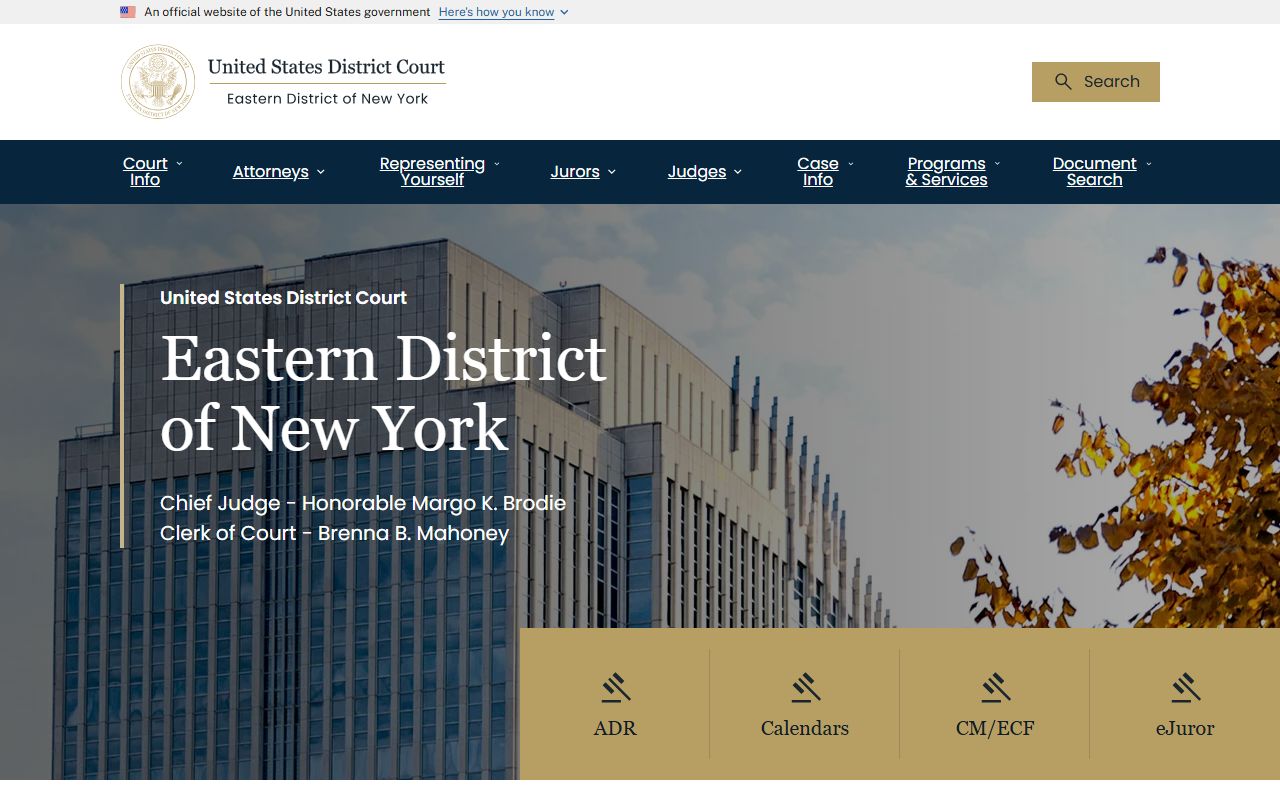
The federal trial court for the borough is the U.S. District Court for the Eastern District of New York, which posts filing rules and case information.
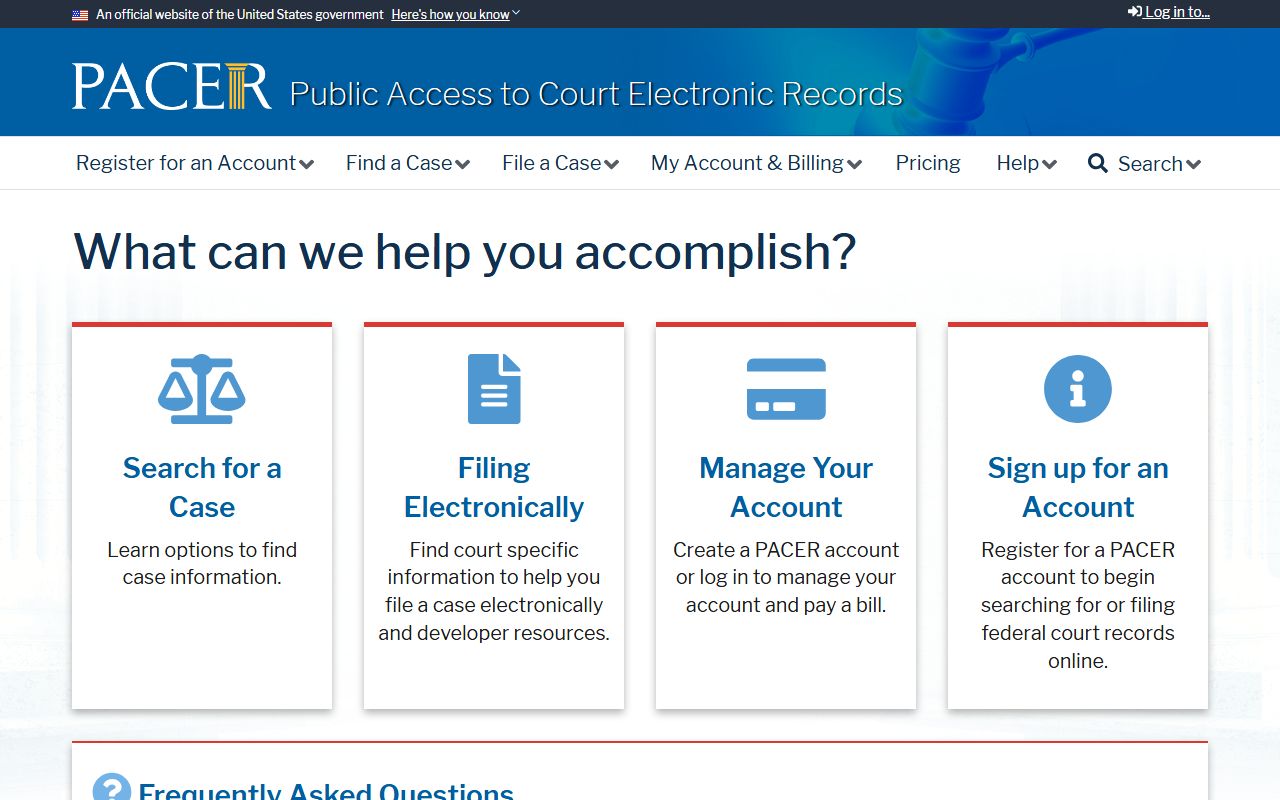
Public access to federal filings runs through PACER, the federal case-search system, which charges per-page fees after registration.
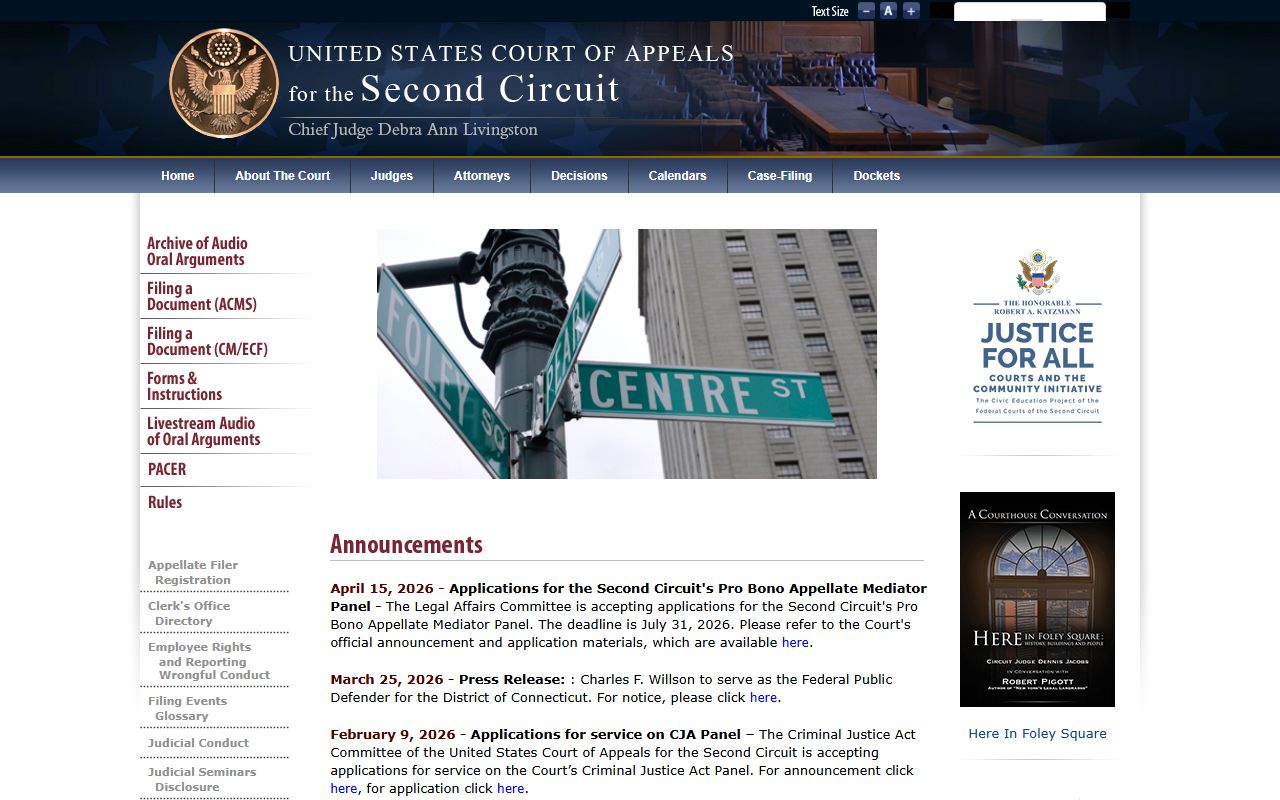
Federal appeals from the district move to the U.S. Court of Appeals for the Second Circuit, a separate path from the state Appellate Division.
Bankruptcy for the borough is filed in the Eastern District's bankruptcy court, also reachable through PACER.
Certified Copies and Court Record Fees
The Richmond County Clerk sets the fees for copies of Supreme Court and county records. Plain copies are charged per page, while certified copies add a per-document fee on top. A certified copy carries the clerk's seal and is the version courts and agencies accept for legal use; a plain printout from an online portal is not.
| Item | Amount |
|---|---|
| Plain copy, per page | $0.25 |
| Certified copy of a court record | $8 per document plus $0.25 per page |
| Certified copy of a county clerk record | $10 per document plus $0.25 per page |
| Court records search, two consecutive years | $5 |
| Certificate of disposition of judgment | $10 |
Probate copies follow Surrogate's Court procedures, and divorce copies may be restricted under Domestic Relations Law. Identify the court, the case number, and the document before you request one.
In-Person Court Record Requests
When a file is not online, request it from the clerk that holds it. For Supreme Court civil and county records, that is the Richmond County Clerk. Bring the court name, the index or docket number, the party names, and the document type, and be ready to pay the fee. Certified copies of court records run $8 per document plus $0.25 per page.
Office of the Richmond County Clerk
130 Stuyvesant Place
Staten Island, NY 10301
718-675-8700
Mon-Fri, 9 a.m. to 5 p.m.
For help getting court records, NY CourtHelp's getting court records page explains eCourts, NYSCEF, and clerk requests.
The clerk's office is not the right stop for every record. Criminal calendar details come from WebCriminal or the Criminal Term clerk. Many family files are confidential and handled by Family Court. Probate files run through Surrogate's Court and WebSurrogate. City marriage records come from the NYC City Clerk. Match the record to the office before you make the trip or mail a request.